Showing posts with label education. Show all posts

Saturday, August 10, 2013

Life in Nature, Nature in Life: On Murasaki Shikibu's "The Tale of Genji"

Though unaccustomed to a peculiar literary style — marked by omission of character names, usage of highly patrician language, and depiction of archaic Japanese cultural traditions — the enduring quality which, I believe, fostered my deep appreciation of Murasaki Shikibu’s The Tale of Genji lies in the unveiling of poetry as an embodiment of aesthetic sensibilities achieved in particular by the Japanese aristocracy. 

In the novel, poems – either created presumably by the author or quoted from older collections of poetry – are deeply embedded in the narrative; presenting an unparalleled literary style, highly developed for its age. Poetry, enjoyed particularly by the Japanese aristocratic class, is revealed to be the highest form of art in 11th century Japan. Because of this, an examination of the role of poetry – present in the lived realities of Genji and other characters belonging to the nobility – shows trace of the aesthetic consciousness of the Japanese and serves to demystify the fascinating aspects of Japanese culture. 

 Japanese poetry, known as waka, occupies a central position in the imperial court as a revered art form and highly favored activity of the nobility. In Genji’s cultural age, both the emperor and crown prince are known to be “connoisseurs of poetry”. The fifth chapter in particular, titled The Festival of the Cherry Blossoms, demonstrates how princes and high courtiers are adept at composing Chinese poems, thus highlighting the active cultural borrowings and influences of the mainland in Japanese language and literature. 

During this period, producing a Chinese poem is considered a difficult task but, for the author, it is described as “positive torture”, endured and enjoyed by a particularly narrow segment of Japanese society. Because of this, the classification of poetry as an aesthetic form in the Heian period, informs of art’s capacity to isolate the noble class from the rest of the society. With this, we are reminded to view Genji’s world as a narrow picture of the highly cultured life lived by Japan’s nobility, privileged for their literacy and exposure to traditional aesthetics. 

Nevertheless, the incorporation of poetry in the novel reveals more than a division of class; for indeed, in examining the substance of these poems, the interrelation of human emotion and nature is harmoniously depicted in the literary form. In other words, the poems contained in the novel convey the relationship between our feelings and the natural world. For instance: the waves moaning our longings, the winds becoming messengers of our sorrow, the river of tears revealing our grief, the dews miming our tears. 

These references to nature – present in one of their aesthetic concepts such as mono no aware or “sensitivity to things” – reflect the sensibilities of the Japanese in perceiving the natural world as part of the inner self. Nature, for the Japanese, exists in harmony with our thoughts and feeling. Poetry then, becomes an avenue where the natural world and the human life, express its unity and interrelatedness. Genji and other characters in the novel internalize, through poetry, the realities of the natural world and their inner world, consciously mindful of the transitory and evanescent qualities of life in general.  

Another function of poetry, which perhaps contributes to its appeal among the aristocracy, is its capacity to conceal human emotions through highly eloquent and suggestive language. Japanese poetry is carefully tailored to not only express emotions about beauty and life, but also to allow intimate communication between a man and a woman. 

It is through poetry, for instance, that Genji is able to convey his emotions towards his numerous lovers. Poetry is his weapon to initiate amorous affairs. Because of its highly suggestive nature, poems also become an allusion to the worldly desires experienced by Genji, and by his lovers. To demonstrate this, allow me to present a poetic exchange, particularly between Genji and Naishi – an aged but lewd aristocratic woman. 

Their conversation starts with the old Naishi’s aggressive speech, which goes: 
“Sere and withered though these grasses be,
they are ready for your pony, should you come”; 
— to which Genji, known for his carnal nature, liberally replies:
 “Were mine to part the low bamboo of your grove,
 It would fear to be driven away by other ponies”. 
Indeed, the exchange above, classic in its veiling the natural world and our worldly desires, is a testament to the poet’s might in depicting the impermanence of life and the immortality of art. 


Wednesday, August 7, 2013

Queries, More Queries: On Friedrich von Schiller's "Letters on the Aesthetic Education of Man"

Reading Schiller’s Letters on the Aesthetic Education of Man requires dissection of our thoughts concerning “art and beauty”. However, for the mere mortal in me, to arrive at a complete understanding of his thoughts requires undertaking a mental journey towards the land of abstract ideas. For this, I do not fault Schiller’s elaborate language or his tedious explication of aesthetics; after all, launching an inquiry towards the abstract requires further abstraction, not to mention the need for a laboring imagination. Schiller, in dissecting the “phenomenon” called beauty, aims particularly at demystifying and dissolving “the essential amalgam of its elements”. In reading his letters, as such, we are transported towards the realm “beyond the reach of the senses” — and given this, comes an understanding within the reach of my own. Indeed, this paragraph worth explanation is necessary, in my view, to avoid misconceiving his thoughts; which goes this way:

My reading of Schiller’s letters comes with an understanding that it presents how the French Revolution and its violent aftermath affected his thoughts on beauty and the moral dimensions of art. As such, he explores, in his letters, the role of aesthetics in achieving true political freedom. For Schiller, it is only through aesthetic education by which freedom – the mother of all art – is achieved. He starts out by explaining how man, in his natural state, is composed of physical compulsive forces; while in his moral state, he is guided by reason. Here, Schiller introduces the opposition between the law of nature and the law of reason, citing that while the former involves feelings and compulsions; the latter affects the consciousness and thoughts. 

Throughout his letters, this duality between the natural and rational state is present in his exploration of the body – being the temple of the sensual form – versus the mind, where the rational, moral, and hence ideal form resides. In other words, Schiller introduces two fundamental laws of the “sensuo-rational nature” of man consisting of his sensuous drive or his sensual nature, and the formal drive or his rational nature. The challenge for Schiller, it seems, is to reconcile the conflicting and opposing dimensions of these drives through the play drive, which he conceives as “the most perfect possible union and equilibrium of reality and form”. For Schiller, the simultaneous existence and development of the rational and the sensuous through play, allows one to become a fully realized man of aesthetic. 

Beyond this simplified understanding of Schiller’s letters are the pertinent questions and ruminations which, at the very least, challenge his thoughts on aesthetics. First, though Schiller claims that both sensuous and form drives exist in a simultaneously equal and united one plane, it seems that there is privileging of the form to dominate the senses. When Schiller speaks of nature as an expression of plurality and individuality, and reason as an exercise of unity and conformity, how can it be assured that the individual maintains his singularity as opposed to his confirmation of the “moral” laws idealized by the state? In Schiller’s words, the archetype of the ideal man is embodied by the state – and so, how can it be assured that this “moral” state would not suppress man’s individuality by its relative conception of the ideal man? Lastly, because the aim of Schiller’s letters is towards the ultimate achievement of freedom, how can it be assured that this freedom will not be mis-used? When I think of freedom as an end goal, I cannot help but compare it with the type of “freedom” espoused by capitalist ideology that encourages relentless consumption.

These questions above, for all I know, may have already been refuted brilliantly by Schiller and perhaps only misconceived by me, but then these throbbing queries represent the mental journey I undertook to painstakingly understand the great philosopher’s interest to demystify beauty as an idea, which is of course, “beyond the reach of our senses”. 

Friday, August 2, 2013

Being, Condition, and Time: On Ha Jin’s Waiting

Waiting relates to time — that is, in its progressive form, waiting encompasses all dimensions of time: the past as an inactive period spent in expectation, the present in its actual waiting condition, and the future in its seeking of the probable occurrence of the wait. Given this, a person in waiting is presumed to remain still – in its waiting state – while time flows and the surrounding condition changes. In other words, in waiting, there is an act of internal changelessness in the midst of external changes. 

This act, however, is separate from the inner reality, which is necessarily transformed through time, except for the essence of our being which, by nature, consists of the capacity for loving. To put it differently, there is, on one hand, an unchanging nature of our being – which, I contend, is our dormant capacity to love – while on the other, an inner reality – of feelings and consciousness, for instance – which permits changes with time and external surrounding. 

So simply put: within a person, there is a simultaneous existence of a natural being where love, as a dormant capacity, resides – and there is an inner reality which allows for alteration of feelings and consciousness based on time and external surrounding.  

Love is defined, in this manner, as an absolute capacity to perform the act of loving; yet this capacity is said to be dormant, precisely since it needs to be awakened or nurtured by one’s natural being. A person cannot not love – provided that the being is reared and roused for it; but one can misrecognize being loved as love. Being loved exists in the inner reality, which allows for an alteration of feelings, but it does not penetrate inside one’s being which concerns itself only of loving. Being loved is merely a surplus feeling when the loving is realized and happened to be reciprocated. 

Now, if love is a dormant capacity of the being, then performing it will be its form of expression. With this contention, the subscription to conceive love as an art here is apparent; for indeed, art is universal yet diverse in its expression among cultures and individuals. Again, if love – which is a dormant resident of our being – is likened to art, then not everyone is capable of creating and performing it. Moreover, if love is an art, then its expression is entirely dependent whether or not the external surrounding permits its expression. Lastly, if love is equated to art, then it has to remain undeterred by time.

Now, these two-tedious-paragraphs worth of ruminations about love is, to me, a necessary buildup to forward my thoughts about Ha Jin’s work; particularly since, it is from this novel where my ever-changing exploration of love is challenged and remolded. The pertinent question is asked: if the trinity of characters in the book – Lin Kong, Shuyu, and Manna – are in the state of waiting, then is it given that they are all in love?

The immediate answer is no — that is, if love is conceived in the Western ideology of romantic love. In Western society, where the liberal ideology emphasizes freedom, love becomes a personal and private choice which an individual makes. People in the West, in essence, marry for love and only for love; it is unthinkable to marry for something else. In other words, love in the Western sense comes with the idea of freedom – as a liberal ideology – and it is through marriage that this love is institutionalized. 

However, in contrast to Chinese society, where the communal surrounding constraints freedom for collective welfare, love is understood as an act of conformation and obligation to familial and social institutions. Marriage, in Chinese society, is a communal or an institutional choice characterized by bonds and alliances for societal welfare. In both Western and Chinese societies, it is worth noting that love is neither lost nor absent, but is dependent merely on the degree of freedom which the external surrounding allows it to be exercised and expressed. 

Here, we go back to transform our earlier question: if the main characters in the book are all waiting, are they exercising love in the Chinese sense? To answer this requires that the characters are explored and their experiences be subjected to my earlier ramifications about love and being. If love – characterized solely by loving – is a dormant capacity residing within the being, then it requires that a developed character is suited to perform it. While good-natured and intelligent, Lin Kong is also an indecisive, dispassionate, and passive character. Getting in touch with his nature – with his capacity to love – requires not only a buildup of character, but a decisiveness of self, of developing the natural being. 

Both his marriage to Shuyu and his requests to divorce her for Manna represent his adherence to external conditions of his culture and the state. Now, the decisiveness of self – notably missing in Lin Kong – is found in the character of Shuyu, who represents precisely how love is being accommodated within the particularity of Chinese society. Shuyu is able to develop the natural being which concerns itself only with loving. On the other hand, Manna – being the modern and educated representation of urban Chinese female – accomplishes the idea of love only within her inner reality which, as noted previously, is subjected to external conditions and time. Note that the changes in Manna’s character are exhibited from her initial affinity with Lin Kong, then shifts to the necessity for marriage because of societal expectations. 

Hence, it is not surprising why Lin Kong and Manna’s conception of love permeating only within their respective inner realities, and not within their being, failed. True enough; among the three characters who were all in the state of waiting, it is only Shuyu, who stood by her inner being – solely to perform loving – and hence, is able to accommodate the particularity of love in Chinese culture. Indeed, within Shuyu’s inner reality and being, time flows to embody the changelessness amidst the changes surrounding her in her waiting. 


(Note: In formulating this new conception of LOVE, I used three works to substantiate my ruminations. I did it because I could not accept that during the Cultural Revolution -- when the ideology was radicalized and stretched beyond its limit -- Ha Jin seemed to portray that there was no love existing in such society. And so, I used his novel as the grounding context of my formulation and used 2 books: Erich Fromm's "The Art of Loving" and Schiller's "On the Aesthetic Education of Man" to prove that love in China did exist even those times.)

Wednesday, July 3, 2013

"To talk planet-talk" in Spivak's Death of a Discipline

In Robert Clements's Introduction to Comparative Literature, I pointed – as a critique of his work – that the attempt to trace the genealogy of comparative literature lacks explication on the very purpose of comparing national literatures worldwide. Why, I asked, is there a need juxtapose bodies of literature when it merely echoes the dominance and hegemonic influence of the West? 

Interestingly, Spivak’s Death of a Discipline provides possibility to free ourselves from that question. It provides an account that traces the origin of the institutionalization of comparative literature vis-à-vis area/cultural/postcolonial studies as a product of “forces of people moving about the world” (e.g the cold war, the flight of intellectuals from oppressive regimes, and the rise of Asian migration in the US). Moreover, globalizing forces, with its exploitative and dominating qualities, have inescapably mapped the computerized world in the “gridwork of electronic capital”. 

In facing this reality, Spivak compels us to overwrite the globe and think “planetarity”. The appeal of this idea, in my view, lies in our capacity to imagine: to visualize an escape of what seemingly is an inescapable cartography by capitalists of the computerized globe. Thinking “planetarity” means imagining ourselves not as global subjects, but as planetary species that dwell on the planet being loaned to us. 

In Spivak’s words, “to talk planet talk” in the “undivided ‘natural’ space rather than a differentiated political space” involves visualization of the earth as a “paranational image” (72). While this idea seems absurdly abstract and utopian, it remains a radically challenging concept that provides hope for resistance when everything seems inescapable in the globalizing earth. 


But then, how to ensure that this abstract imagining of the planet will not be again charted by capitalist cartographers of the globe? 

Of course nothing escapes the imagination, especially not the canniest uncanny thought of resistance and action. As I recall in Nietzchean philosophy – On the Genealogy of Morals – there is an instance in history where the “imaginary” triumphs over the dominant and oppressive. It is through the concept of ressentiment or resentment where the oppressed (Judeo-Christian slaves) stage an “imaginary revolt” against the oppressors (Roman masters) by labeling their values of strength and power as “evil”. 

Because of its symbolic and imagined qualities, ressentiment or internalized hatred is central to the later ascendance of the slave’s “good” morality. I can only assume that Spivak’s “planetarity” also believes in the kind of power that imagination leads society to resist and triumph over the destructiveness of capitalist cartography. 

The challenge though is to outmatch capitalist creativity, for it too has its own ability to materialize what is abstract and what is intangible. For instance, our imaginings of love, freedom, and nationhood are already unable to escape the capitalistic commodification of the abstract; how much more the imagination of the planet? 

Of course, Spivak provides us with strategies, from the obscurity of her writing to letting ourselves be imagined by others, without guarantees. But then, talking “planet-talk” will, sooner or later, be expectedly subjected to decoding and appropriation, by which capitalists are notorious for. And so, inasmuch as Spivak tells us that the outcome is “uncertain” or “to come”, it must arrive in haste before everything is too late.


Reference: Spivak, Gayatri Chakravorty. Death of a Discipline. New York: Columbia University Press, 2003.  

Wednesday, June 26, 2013

History, Feminism, and Duality in Tsao Hsueh-Chin's Dream of the Red Chamber

Dream of the Red Chamber is more than a fictional work. It is a historical piece that provides readers with an understanding of the traditional culture in 18th century China: its social structure, its art, its architecture, its religious practices, its sciences, and its cultural beliefs. While the novel gives a general insight of Chinese culture, it also looks into the sociocultural aspects and values, specifically the Chinese aristocratic life of the Chia family. The richness of the Chinese literary tradition, for instance, is portrayed in the novel through Pao Yu’s general fondness for poetry, riddles, drama, and classical books. Also, with the garden of Takuanyuan – ideally representing the space with which Chinese arts and aesthetics are materialized – the novel provides a glimpse of the characters’ activities during their leisure time such as reading novels, “playing chess or musical instruments”, “painting or composing verses”, writing scrolls, and “taking a hand at embroidery” (145). Aside from this, day to day activities in an aristocratic household are also depicted in their food preparation, tea ceremony, dining manners, medical prescription and treatment, witchcraft practices, funeral ceremonies, and amusements in the family.

Dream of the Red Chamber is more than a love piece. It is a work which aspires to explore female characters and their destinies in a highly patriarchal Chinese society. As men in the novel are observably on the periphery because of their duties for the state, the lives of women are highlighted through an exploration of their psychology and personality: for instance, the frail character of Black Jade, the controlling nature of Phoenix, the power and influence of the Matriarch, the submissiveness of Madam Hsing, and the defiant character of Faith, the maid who refuses marriage. Here, we see the work as an important insight into early Chinese feminism, portrayed generally through Pao Yu’s fondness and high regard for women whom he compares to “water with clear minds”, in contrast to men who he thinks are “made of mud or unformed clay”. From the novel, we are also made aware of the social hierarchy, roles, and status of these women in the Chia household: from the primary wives to concubines; from chief maids to bondservants. While these young female figures are exalted through their character, it is implied that their inevitable destinies – to later be framed and forced into marriage – represent the tragedy of their existence as female beings.

Dream of the Red Chamber is more than a socio-realistic novel. It is a work that explores the metaphysical and dualistic aspect of existence: between the real and unreal, between illusion and reality, and between truth and appearance. The novel, as it can be recalled, starts with the story of a stone, which was abandoned by a goddess and who later sought help from a monk and a Taoist priest to bring it to the Red Dust. Here the transfiguration and reincarnation of Pao Yu from a stone and Black Jade from a flower represents the Chinese belief in “predestination” or fate. Indeed, theirs is a story of love which, from the onset, already spells catastrophe based on their dreams that blur between the fantastic and reality. On one hand, for instance, Black Jade’s dream of Pao Yu cutting out his heart and showing it to her implies tragedy and sacrifice; while on the other, Pao Yu’s disbelief that he actually married Precious Virtue appears to him as though everything is only a dream. Indeed, these star crossed lovers – mutually sick because their soul shares a common grief – are to me, reminiscent of lovers who, to borrow from John Keats, “can never, never kiss”, whether here on Red Dust or back to the mystical heaven. 

Saturday, June 8, 2013

The Genealogy of Yun Ling’s Ressentiment in Tan Twan Eng’s The Garden of Evening Mists

(Summary/Introduction of a full-length paper for Southeast Asian Literature class)

Teoh Yun Ling is a woman of ressentiment — a French term, explicated by the German philosopher Friedrich Nietzsche, to signify a subjugated feeling of hate and negative sentiment directed against an outer force that oppresses a subject. This ressentiment, within Yun Ling, stems from her containment of memories as a lone survivor of a brutal Japanese camp during the Second World War. According to Nietzsche, one’s ressentiment – as a negative and reactive sentiment that is not acted – turns creative when it sets forth an “imaginary revenge” against an oppressor, hence giving birth to values (GM I, 10). In the case of Yun Ling, her internalized loathing against the Japanese, though not acted, becomes creative when, after working at the War tribunal, she submits herself to become an apprentice of the Emperor’s gardener and carries out an “imaginary revenge” by permeating the imagination and consciousness of her perceived Japanese oppressor.

This reading of Tan Twan Eng’s Garden of Evening Mists intends to trace the path and examine the stages of ressentiment contained within the consciousness of a war survivor who directs her subdued loathing against her former captors, the Japanese, after their occupation of Malaya. Grounding the paper’s analysis on Nietzsche’s On the Genealogy of Morals (GM), this paper aims to represent Yun Ling’s narrative as an interpretation on the evolution of ressentiment as an internalized hatred — tracing the origins of its conception towards its eventual dissipation. Alongside the interpretive elaboration of ressentiment is the exploration of other Nietzschean concepts pertinent to Yun Ling’s narrative such as: 1.) justice as an invention of the powerless; 2.) forgetting as a positive form of repression; 3.) memory as a painful continuation of a promise; and 4.) the body as the site of history. Lastly, these aphoristic ideas from Nietzsche are contextualized to explicate aspects relevant to Yun Ling’s character such as her Malaysian Chinese identity, the Japanese occupation of Malaya, and healing through Japanese aesthetics. 


Evolution of Yun Ling’s Ressentiment

A Malaysian Chinese held prisoner in a Japanese labor camp with her sister, Teoh Yun Ling carries within herself brutal memories of wartime atrocities committed by Japanese troops throughout their occupation of Malaya. During her internment at the camp, she not only lost two fingers and was brutally scarred by the army; but more painfully, lost her sister Yun Hong in a mass murder committed out of desperation by the losing Japanese troops. These tragic memories in the vicious camp aggravated Yun Ling’s internalized hatred towards her oppressors and initiated the formation of ressentiment against them. 

Ressentiment, a concept developed by Nietzsche to explicate the source of society’s production of a value system, is embedded in the weak and oppressed whom the German philosopher refers to as the “slaves”. Historically abused by the masters because of their inherent weakness, the slaves staged a creatively imaginative revolt against this oppression by developing a value system which judges all actions by the masters as “evil” and their own as “good”. According to Nietzsche, there was a “slave revolt of morality” when the values held by the masters – strength, nobility, and power (associated with the Greeks and Romans) – are labeled “evil”, while the slaves (Judean, Christian) consider their own values of kindness, guilt, and meekness as “good”.

In this struggle between master and slave morality, ressentiment is central to the later ascendance of the slave’s “good” morality because of its symbolic and imagined qualities. In his reading of On the Genealogy of Morals, philosopher Gilles Deleuze refers to ressentiment as the “spirit of revenge” where, due to the experience of “too strong excitation (pain)” by an individual, a reaction ceases to be acted and instead felt (senti) internally and increasingly over time (111). In other words, persistent subjugation towards a person of ressentiment leads to the buildup of resentful hatred not avenged through action, but by internalized and imaginary revenge, which denounces the oppressors’ (masters) every action and values as “evil”. 

The imaginary revenge for a person of ressentiment involves an obsessive thinking over past suffering deeply embedded within the consciousness and memory; an association which Deleuze summarily describes as:

“The man of ressentiment in himself is a being full of pain: the sclerosis or hardening of his consciousness, the rapidity with which every excitation sets and freezes within him, the weight of the traces that invade him are so many cruel sufferings. And more deeply, the memory of traces is full of hatred in itself and by itself. This is an essential link between revenge and memory” (116, emphasis mine).

Associating vengeance and memory is a feature of ressentiment related to Yun Ling’s narrative as a war survivor who is unable to overcome her resentful hatred against her former oppressor. It is through identifying Yun Ling’s judgment and unconscious actions, in the novel, that the stages of her ressentiment can be explored; for while it is known that the development of her ressentiment traces its origin from the atrocities committed by Japanese troops, it is unclear how Yun Ling’s ressentiment evolves, progresses, and gradually dissipates when she met the Emperor’s gardener in the highlands of Malaya. 

There are specifically four stages identified to demonstrate the development of Yun Ling’s ressentiment – from its conception up to its eventual dissipation – which both corresponds to the plot progression of the novel and Nietzsche’s aphoristic concepts in On the Genealogy of Morals. At first stage of her ressentiment, Yun Ling works at the War Tribunal as a clerk, prosecutor, and ultimately a judge to investigate and sentence Japanese war criminals. Seeking justice however did not allow her ressentiment to dissipate as, true to Nietzsche’s assertion, justice is an invention of the weak (slaves) who are too powerless to directly harm their oppressors (GM I: 10). 

Yun Ling’s ressentiment enters its second stage when she still failed to forget her past because post-war events surrounding her become bitter reminders of Japanese atrocities. Forgetting, for Yun Ling, is impossible since pain nurtures the memory, or more aptly, “only that which ceases to hurt stays in the memory” (Nietzsche, GM II: 3). Due to growing frustration, Yun Ling directs her loathing against external entities – her bosses, colleagues, and the state – which, according to Nietzsche, is only typical for a person of ressentiment who constantly needs to “direct one’s view outward instead of back to oneself” in order to trigger its external stimuli for reaction (GM I: 10).

Yun Ling then decides, after getting sacked from her legal work, to fulfill a promise to her sister who died in the camp. On the third stage of her ressentiment, she decides to create a memorial Japanese garden in order to carry out her sister’s dreams. Here concepts of “promise”, “debt” and “guilt” – which Nietzsche considered as man’s “capacities” that allow painful remembrance – have notably haunted Yun Ling’s consciousness. Being guilty because of an unfulfilled promise leads Yun Ling to seek the help of the Emperor’s gardener, with whom she is only allowed to become an apprentice “until the monsoon season”. As will be qualified in the paper, theirs is a relationship which can be described as typical for a master and slave relationship; for while the self-assured Japanese within Aritomo is subdued by Yun Ling’s narrative of war brutalities, Yun Ling’s hatred gradually dissipated by the sublime effects of Japanese aesthetics.

The last stage of Yun Ling’s ressentiment involves ultimately the reversal of the master-slave relationship between her and Aritomo. Here ressentiment triumphs to perform a creative revenge that subtly dominates the perceived oppressor. Notably, as their relationship flourish, Yun Ling is able to awaken Aritomo’s guilt and conscience through her wartime narratives. Soon after the garden is finished, Aritomo decides to use his artistry to make an inscription on Yun Ling’s body through the art of horimono – the Japanese tattoo. Here we see how – in the act of using the body as a site for inscribing her past – Yun Ling subjugates her Malayan Chinese identity through the Japanese taboo art in order to liberate herself completely from ressentiment. With the past written on her body, she is assured that “the palest ink will outlast the memory of men” (115). Meanwhile, for Aritomo, doing horimono for Yun Ling is his last act, his final oeuvre, before vanishing without a trace deep in the Malayan jungle.


Sources:

Deleuze, Gilles. “From Ressentiment to the Bad Conscience”. Nietzsche and Philosophy. London: Continuum International Publishing Group, 2006. 111-119.
Nietzsche, Friedrich. “On the Genealogy of Morality”. Basic Writings of Nietzsche. Ed. Walter Kaufman. New York : Modern Library, 1968. 452-532.  

Thursday, January 31, 2013

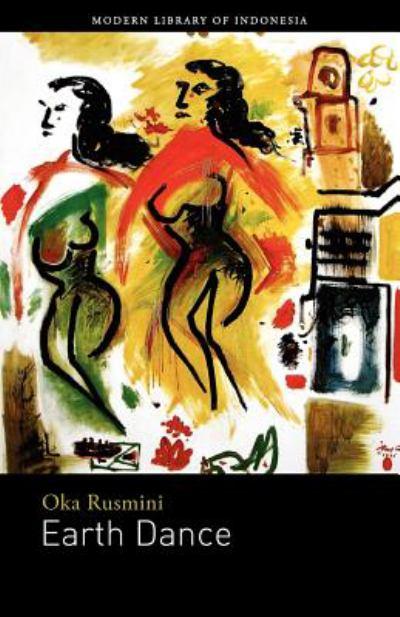
Balinese Society and the Functions of Dance in Oka Rusmini’s Earth Dance

In Bali, dances on earth are seen as means to appease Gods and protect villages from famine, epidemics, and other misfortunes. Dancers, as such, perform a sacred role in bridging the gap between the earth and the spiritual world. The aesthetic quality in Balinese dance, in this view, is primarily perceived as an expression of religious reciprocation — that is, to please and gratify the Gods through dance so that they may, in turn, bless the people. Dancing, as an integral part of Balinese culture however, cannot only be seen as a form of religious expression, but also as an activity that entails cultural and even socioeconomic functions — especially for women, the leading performers of this sacred art in the highly hierarchal and conservative society of Bali.  

Oka Rusmini’s Earth Dance depicts these implications of Balinese dance as a cultural activity that fulfills the personal, spiritual, and social desires of the performing women. Examining the lives of three prominent dancers – Luh Sekar, Ida Ayu Telaga, and Luh Kambren – in the story enables us to look at the role of dancing as means for Balinese women to achieve their divergent aspirations toward upward social mobility, pursuit of love, and lifetime devotion for the craft. It can also be noted, in the story, how these women differ in their ways of mastering the art through taksu, the holy inspiration from the Gods, which can be acquired as a result of intense devotion, as a form of gift from the pragina, or as a natural endowment from the gods themselves. 

Aside from being a highly revered art form, dance for these Balinese women also means reverence in the community; the joyful dance joged, for instance, is a social activity that gathers and demands participation from both men and women regardless of social status. As such, for a commoner like Luh Sekar, whose family has been doomed by misfortune, mastery of Balinese dance does not only signify beauty and reverence but also represents an opportunity for upward social mobility of her class. Being a good dancer means attracting attention from men belonging to a Brahmin family who can deliver her from adversity and poverty. Knowing this, Luh Sekar achieved her aim through rigid practice and intense devotion for the Gods to give her taksu so she could one day attract attention of a Brahmana man.

On the other hand, Luh Sekar’s brahmana daughter, Ida Ayu Telaga embraces dancing to generate attention from her occasional dance partner, the commoner Wayan Sasmitha. Telaga receives the taksu from her renowned dance teacher Luh Kambren. For this, she gains the natural ability to dance and eventually learns to master the craft. However, due to her mother’s constant insistence to practice and perform, the dance itself becomes a repetitive activity, if only not only to see Wayan in these performances. Dancing, for Telaga, means breaking down the caste barrier and pursuing love – ending thus her ties with her family, giving up her social privilege as Brahmana, and formally accepting her commoner status through a patiwangin ritual.  

But among these women, it was Luh Kambren, Telaga’s dance teacher, who best imbibed the craft. Despite being a commoner, Luh Kambren is said to have been “born to tend to the spirit of the dance” as she directly inherited taksu from the Gods. Dancing liberated and raised her status as a woman: on one hand, it empowered her to decline a marriage proposal from a King; while on the other hand, her life ends tragically, since being “married to her dances” means being subjected her to poverty and commercialization. As it was said, Bali existed in Luh Kambren’s body: worn-out, abused, commercialized, and fearful of foreign abuse.

Wednesday, January 16, 2013

The Makings of a Javanese "Anti-colonial Gong” in Pramoedya Ananta Toer’s This Earth of Mankind

When, in a letter to Minke, Miriam de la Croix recounted how her father had both ordered her and her sister to study the music of Gamelan, it was meant not only to enjoy its sounds, but also to impart comparison between Javanese music and its people. In this traditional Indonesian ensemble, it can be noticed how all the tones wait upon the sound of the gong which, according to Miriam’s father, does not translate to the actual lives of Javanese people because they “still have not found their gong, a leader, a thinker, who can come forth with words of resolution”. 

True, that in the novel’s depiction of colonial Indonesia, the gong in the life of Javanese people has still not arrived; but it is being formed – gradually, in the consciousness of Minke, a Dutch-educated native elite who must confront the political and socio-cultural realities of the Dutch colonial presence and injustice in the Indies. Following Minke’s journey towards his own cultural awakening, one can see the makings of a Javanese anti-colonial “Gong”, one who will, in the future, be loudly heard by his people, and to lead them towards the path of national consciousness and freedom. According to the postcolonial critic Frantz Fanon, the projected pattern of a native subject’s anti-colonial awakening and cultural evolution follows three distinct phases of assimilation, reaffirmation, and, finally, rejection of the occupying power’s cultural influence. 

Following this evolutionary schema of a native intellectual, the book begins by allowing us to see Minke in the assimilationist phase where he, as a product of colonial education, attaches himself, in admiration, to European modernity and civilization. Here, we see him praise Europe for its technological advancement through the invention of zincograph, trains, telegraphs, and soon, oil-powered cars. The assimilationist phase gives proof that Minke can be fully integrated in the culture of the occupying power since his social and intellectual abilities bear resemblance to that of a learned European. This is profoundly evident in Minke’s ability to write fluently and creatively in Dutch, a feat which earned admiration from his Dutch teachers and newspaper editors in Surabaya.  

With this, Minke’s colonial education has alienated him from his own culture but even so, he still admits feeling hurt and offended whenever “the essence of Java is being insulted by outsiders”. Here, we see how Minke takes it to heart, though subconsciously, the plight of his people and their weakness which, according to Robert Suurhof, is that “there is no European blood running through their veins”. From this, we can only infer that Minke’s thrust to excel in academics and write about the Indies, its people and society, is somewhat driven by his consciousness and defense of their subjugated existence as natives. We can see from here how Minke enters the nationalist phase of his intellectual journey, equipped with awareness about the richness of Javanese civilization – their centuries’ old chronicle Babad Tanah Jawi, for instance, and their majestic temples of Prambanan and Borobudur – shows how, in that era, Java was more advanced than the Netherlands.  

Even with his feats as a young native, Minke’s aspiration, as he confessed to his mother, was not to become a priviliged Bupati but “only to become a free human being”. When this desire, however, was curtailed due to the vicious imposition of colonial laws – that invalidated his marriage to Annelies, who would be sent to the Netherlands under her legal, Dutch guardian – Minke finally decided to fight colonial injustice, ironically through writing – the product of his own colonial education. We see how, by the end of the novel, Minke, the native intellectual, enters the fighting phase as he prepares to strike the gong – whose sounds shall shake and awaken his people – towards, as Max Lane puts it, their revolutionary future.


Wednesday, November 28, 2012

Fifty Shades of Green: The Individual and his Identities in Lloyd Fernando’s Green is the Color

Green is the color primarily associated with nature; it is also the color that represents our natural state of existence — that is, as individuals belonging to the human race, unified by our common humanity. Green, as the representative color of universal human identity, is notably mentioned only towards the end of the novel when Siti Sara went out of the house one evening and sensed how “the color of the leaves differed from bush to tree and from tree to tree, in dazzling shades of green after the rain” (192). 

Shades of green in nature signify chromatic harmony despite the variation of shades or, to aptly demonstrate this in the novel, the shades of identities are exemplified in the characters of Dahlan, Sara, and Omar –  all Malaysian colonial subjects who acquired Western education which produced “dazzling shades” or ambivalent effects on their respective identities: Dahlan advocates against racial inequality for minority groups; Sara struggles with her individualism and attachment to her restrictive culture; and Omar embraces fundamentalist Islam and nativist ideology through an elimination of all “traces of colonial legacy”.

While the reference to color green appears to be a mere passive mention in the story, its symbolic quality is being emphasized pervasively through our historical reading of the text. The depiction of greenery sets the backdrop for tropical Malaysia where different shades of green are visibly painted on its multicultural, multi-religious, and multilingual landscape. 

Malaysia, as a modernizing yet tradition-oriented society, grapples not only with sociocultural differences between racial groups but more significantly with economic disparity among them. Green, as a known representation for envy and resentment, characterizes Malaysia’s classic problem of racial, political, and socioeconomic divide: the dominant Malay group perceives themselves to be at an economic disadvantage in the agrarian countryside against the Chinese and Indian minority who prosper in urban centers, respectively for their handling of most commercial enterprises and constituting the country’s professional sector.

It is important to note how this racial strife in the country originally stemmed from British colonial policy that previously encouraged Chinese and Indian migration to supply the demand for labor in the country’s flourishing rubber and tin industry. Green, in this sense, becomes the symbol for money as the capitalist Britain, during its occupation of Malaya, concerns itself not with the promotion of cultural harmony among racial groups but merely for financial gains from its colonial activities. As such, racial conflict emerging from colonial policies dominated Malaysia’s postcolonial history after it gained independence in 1957.  

Referred in the novel as the “unsightly scab” in Malaysian history, these racial discords, which later erupted into a widespread racial riot in May 1969, provided the main backdrop for the story where multiracial characters representing their shades of identity are at odds not only with their inner selves but also with their distinctly cultural as well as universal human identity. What Lloyd Fernando tried to portray in the novel is how ultimately, the human identity, with love as one of its universal qualities, prevails over both sociocultural and personal identity.

Being green is embodied in the bold and “transgressive acts” of the main characters, Sara and Yun Ming as well as Dahlan and Gita, who are involved in interracial relationships. Green is the color associated with nature primarily because it does not discriminate but rather celebrates diversity through love in its varying shades of existence. 

Wednesday, October 10, 2012

Walter Benjamin & Today's Fateful Walk

I took a long, leisurely walk after I finished my paper in CL 122 (Contemporary Literary Theory and Criticism 2). I felt weightless -- my body at least is; but hmm I realized it's harder to quantify the weight of our thoughts and feelings than gauge our physical weight. Ok it's tempting to concretize that idea here -- but I can hear Voltaire now, whispering: "let us work without theorizing, Sen" ~lol

And he's right.

Now, what I am supposed to write today is about my CL 122 paper, which gave me a lot of stress this semester. It's perhaps because I am still gauging this field I am entering now -- the world of literature and literary theories. Anyhow, the paper I wrote was grounded on Walter Benjamin's Theses on the Philosophy of History and its relevance in viewing the Second World War history of the Philippines. It specifically talked about redeeming the silenced / hidden / forgotten narratives of Japanese POWs in the Philippines who wrote autobiographical novels after the war ended in 1945. 

Basically I argued in the paper that Philippine literary and historical texts construct dominant historical images and narratives about the war. This is because the country learned much of its history through the "barbaric" transmission of culture, history, and civilization from the victors of that historical struggle. (During WWII, the US emerged as victors.) Quite famously, from Benjamin's seventh thesis: There is no document of civilization which is not at the same time a document of barbarism.
 
Now what is needed, I reasoned, was the necessary plurality of narratives from the subjects of "losing" states like Japan. This is where I saw the need to critically examine the autobiographical texts written by notable Japanese POWs such as Ooka Shohei, Tetsuro Ogawa, and Kiyoshi Osawa. I thought about qualifying them as "angels of history" for their narratives can potentially fracture the dominant historical images about Japanese soldiers and about the war in general found in our literary and historical texts.

Of course, I took caution with this stance, fully aware that this work might be used to obliterate the atrocities committed by Japanese soldiers in the country. But what surprised me while I was making the paper was that giving a new historicist reading of these texts not only affirmed those brutalities BUT it also gave us new ways of looking at war history in the Philippines. It gave us, in Benjamin's words, a "unique experience with the past" (XVI). For instance, my paper's conclusion was summarized this way:

By qualifying Kiyoshi Osawa as an “angel of history”, we were able to acquire the following historical understandings:
1.) Even before the war, there were already anti-imperialist sentiments and dissatisfaction with the imperial government as exhibited in the rebellious character of Osawa and his friend, the old “socialist” man named Watanabe Sensei.

2.) There was a harmonious existence between Japanese and Filipinos before the war as evident in the proliferation of Japanese businesses and the increasing number of immigrants in the country (30-40k Japanese immigrants by 1941, most of them settled in Manila, Baguio, and Davao)

3.) The war was not fought between all Filipinos and all Japanese; many in fact helped each other to survive the disastrous ordeal.

4.) Public sentiment during the early years of war was generally noncommittal and could have tilted either way depending on how well the Japanese army could win the hearts of Filipinos.

5.) There was a diminishing support for the Japanese army from Japanese civilians themselves because of the atrocities they committed in the country.

6.) The Japanese Imperial Army tried to salvage the severing relations between Japanese and the Filipino people by seeking advice from Osawa -- but it was too late.
It was good to ground the paper on Walter Benjamin's idea, I think.. because I was super surprised that when I presented the idea to my professor, she readily gave me a go signal to do it -- she never even questioned it, which shocked the hell out of me. While I was working on my paper, I found out why: it was too freaking ambitious! haha! (Perhaps it's worth an MA thesis to critically examine and unite the narratives of all the non-fiction works by Japanese POWs in the Philippines, diba? Hmm.)

While evaluating my capacity to write about the topic, I decided to reduce the paper by analyzing only ONE autobiographical novel -- it was Kiyoshi Osawa's A Japanese in the Philippines. I chose this book because I loved seeing the country through his eyes, especially that he migrated here in the 1920s at age 19. He's quite a personality, Mr. Osawa. I immensely enjoyed reading his wartime accounts and about his childhood in Gunma prefecture.

Although I wrote this stressful paper non-stop for only four days, I would say I'm proud of my work. But I cannot post it entirely here since it's 20 pages long. Hmm, I can only post the excerpt of the paper or else this blog will be dead boring -- more aptly, dead and boring. lol

Since I have always wanted to turn this blog as a "commoner's" place for philo and literary discussions, feel free to drop a message if you want to examine the longer version of the work. The introduction should do for now... kasi I plan to elaborate more on another understanding of Benjamin's Theses using the analysis I gathered from writing this paper.

So yeah, guess that's it for now.. off to Econ lib to finish my paper on Postcolonial Theory ~ agghhhh ~  fuck this life! ..oh but no, coz there are still things to smile about even while I was walking.
Related Posts Plugin for WordPress, Blogger...